Office Address
Shop 7, Sahco Car Park Payment Point 2, Behind Slot Express
Along Murtala Muhammed International Airport, Ikeja, Lagos.
Phone
Mobile: +234 808 616 3157
WhatsApp: +234 704 645 9319
Office Address
Shop 7, Sahco Car Park Payment Point 2, Behind Slot Express
Along Murtala Muhammed International Airport, Ikeja, Lagos.
Phone
Mobile: +234 808 616 3157
WhatsApp: +234 704 645 9319


 ByLindiWay
For many passengers, cargo owners, or even businesses sending goods across regions, the journey of an aircraft may seem like a straight path from departure to destination. But behind the scenes, flights sometimes require technical stops—brief but crucial pauses that ensure safety, compliance, operational efficiency, and aircraft health.
Technical or fuel stops are especially common on long-haul flights, charter operations, cargo flights, and even diplomatic or emergency missions. Understanding what happens during these stops helps airlines, freight forwarders, and clients appreciate the precision required in aviation logistics.
In West Africa, professional airport flight support partners like LindiWay Cargo play a vital role in making these stops seamless.
Let’s break down what actually happens during a technical or fuel stop.
A technical stop (also known as a tech stop) is a scheduled or unscheduled landing made by an aircraft for operational reasons—not for boarding or disembarking passengers.
The most common reasons include:
These stops are usually short, lasting 30 minutes to 2 hours, depending on the nature of the service.
Technical stops help airlines and operators:
Some aircraft types cannot fly extremely long distances without refueling.
APU checks, engine inspections, or minor technical reviews may be necessary mid-journey.
Countries regulate overflight, landing, and fueling procedures.
Unfavorable winds, storms, or diversions may require a quick stop.
Ambulance, humanitarian, charter, military, or diplomatic flights may require specialized arrangements en-route.
A lot happens between the moment the aircraft lands and when it takes off again. Ground support teams work fast, efficiently, and safely to minimize delays.
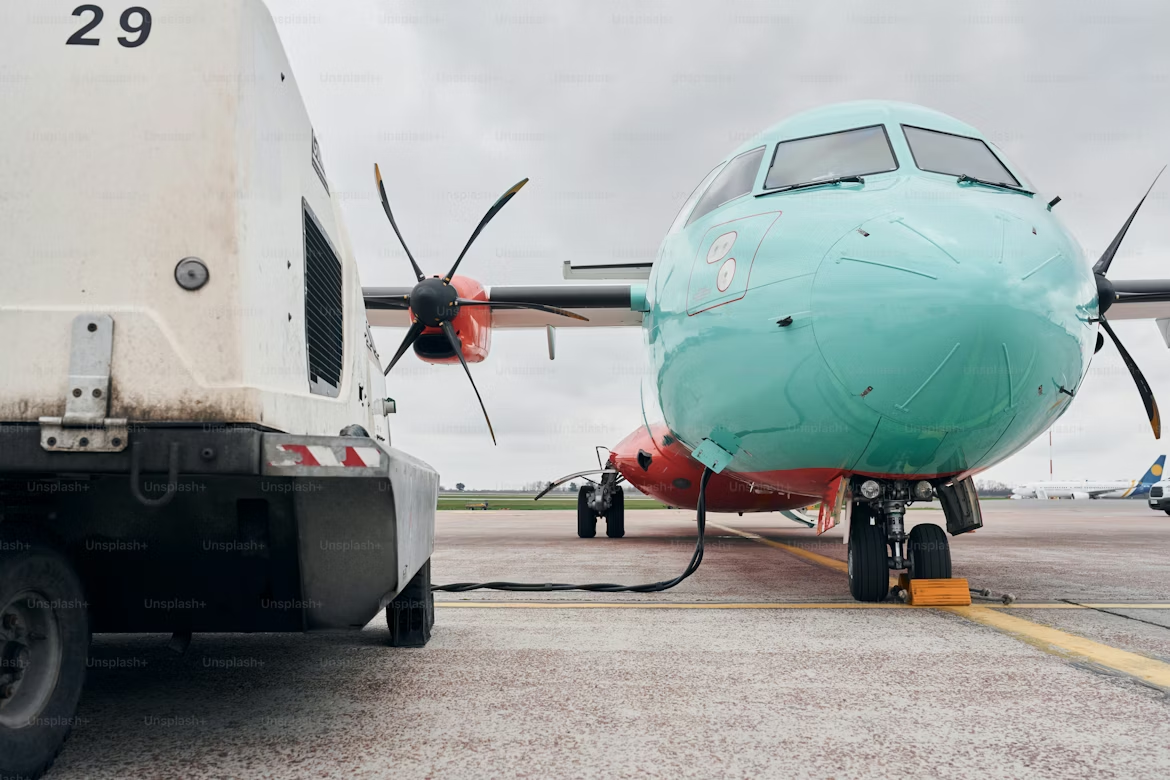
Once the aircraft stops, ground crews secure it by placing chocks around the wheels to prevent movement.
Flight plans, permits, crew IDs, and documentation are verified.
This includes:
A fuel truck or hydrant pump connects to the aircraft.
During fueling:
This is usually the core activity of a fuel stop.
Some ops require:
Lounge or waiting facilities are often provided.
Engineers may perform quick inspections such as:
Depending on flight type, the aircraft might receive:
Handling agents coordinate:
Engineers or captains inspect the aircraft exterior to ensure everything is secure.
With all clearances confirmed, the tug pushes back the aircraft, and it departs for its next destination.
The duration depends on:
On average:
⏱ Fuel-only stop: 30–60 minutes
⏱ Technical stop with checks: 1–2 hours
⏱ Diplomatic or ambulance flights: Highly variable depending on special needs
Technical stops require coordination between:
This is why airlines rely on experienced partners in each region.
LindiWay Cargo provides professional flight support for airlines, cargo operators, charter services, and diplomatic missions across Nigeria and West Africa.
Our support includes:
With our expertise, operators enjoy stress-free stops, predictable timelines, and complete operational support.
Technical and fuel stops may be short, but they’re essential for safe and reliable flight operations. Each stop involves precise coordination—fueling teams, handling agents, airport officials, engineers, and airline representatives all working together.
The smoother the coordination, the faster the aircraft can continue its journey.
This is why airlines across Africa partner with reliable ground and operations support providers like LindiWay Cargo—to ensure every stop is handled efficiently, safely, and professionally.
LindiWay Cargo is ready to assist your next operation.
📞 Call/WhatsApp: +234 704 645 9319
✉️ Email: sunday.lindiway@gmail.com
